|
|
|
IT'S ALL A LIE - Uwe Topper: The Big Action 14c: Photos


The criminal gay drug Vatican is also a faking company
Photo evidence of the criminal gay drug Vatican's forgery for the invention of Antiquity and the Middle Ages
Between 1409 and 1600, the workshops of the criminal Vatican monks were in full operation: they invented an Antiquity and the Middle Ages as a reaction against Islam with the loss of Acre in 1291 and the loss of Byzantium in 1453 - forgery workshops - then came the "rediscoveries", those were the forgeries and inventions - that is how the "Renaissance" worked - endless evidence!
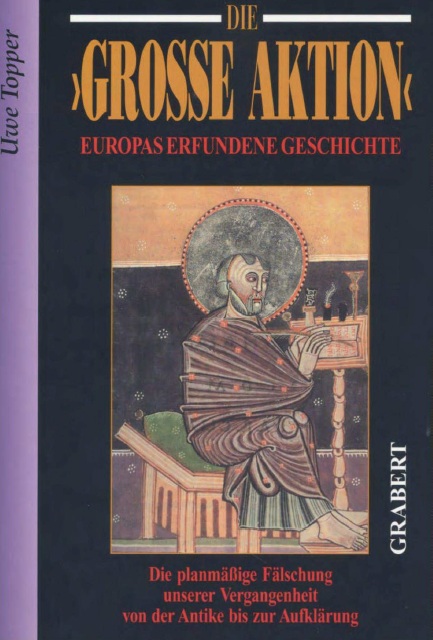
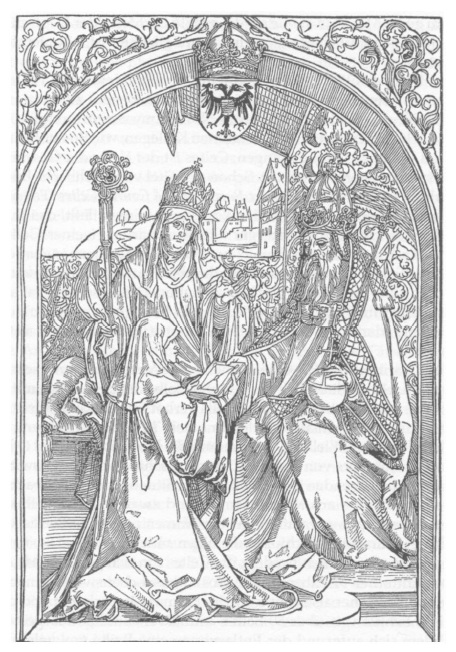

Book cover -- FAKE Roswitha handing over FAKE works to FAKE kings, woodcut by Mr. Dürer [chap3 photo2] -- FAKE stone inscription 5 [chap5 photo5] --


FAKE Apostle John writes a FAKE Apocalypse [chap5 photo11] -- Portugal: FAKE purgatory 01 [chap5 photo12] --
Aachen (Germany): FAKE Palatinate chapel [chap7 photo2] -- FAKE throne of a FAKE Dagobert [chap9 photo1]
from: The Big Action. Europe's invented history. The Systematic Falsification of Our Past from Antiquity to the Enlightenment --
orig. German: Die Grosse Aktion. Europas erfundene Geschichte. Die planmässige Fälschung unserer Vergangenheit von der Antike bis zur Aufklärung --
Edition Grabert -- ISBN 3-87847-172-6 -- Tübingen 1998; 2nd edition 2000
Commented edition
presented by Michael Palomino (2025 - translation 2025)
| Share: |
Facebook |
|
Twitter
X |
|
|
|
Book cover - back cover text
Chapter 2
Martyrs are forged and invented
Spain Asturias: Relief "Martyr Miracle" from the Middle Ages - but martyrs are ALWAYS FICTIONAL [chap2]
Chapter 3
An invented Ms. Roswitha
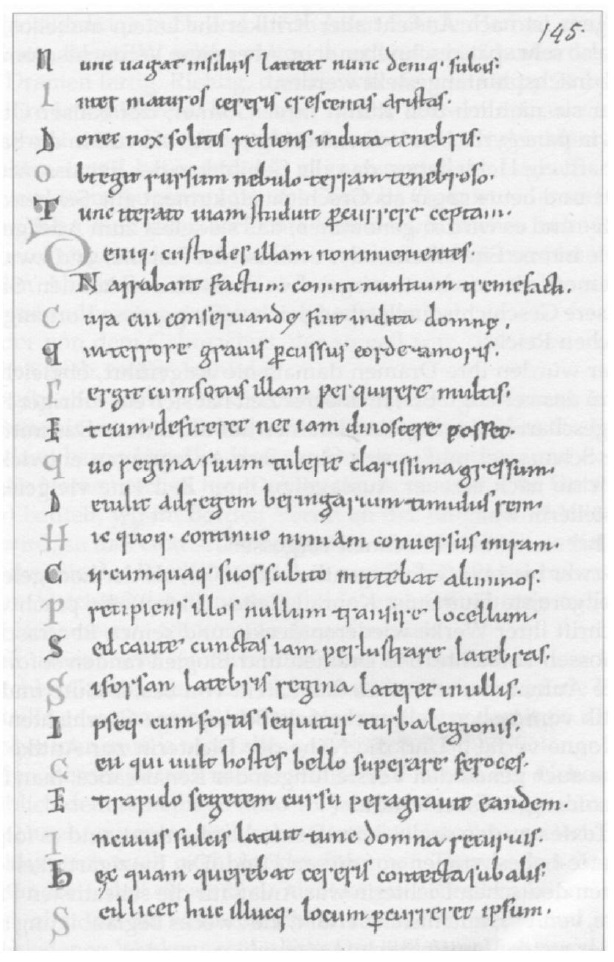
FAKE Roswitha: Flight and Fantasy Queen Ms. Adelheid, text [chap3 photo1]
FAKE Roswitha handing over FAKE works to FAKE kings, woodcut by Mr. Dürer [chap3 photo2]
Chapter 4
They INVENTED a Roman Empire faking a "great" past with "Rome"
Mr. Celtes: FAKE map of the FAKE Roman Empire, 1500 appr. [chap4 photo1]
Antonio de Guevara: Diall of Princes 1557, title page [chap4 photo2]
Chapter 5
FAKE stone inscriptions
Stone inscription 1 [chap5 photo1]
Above: Stone inscription of the consecration of three churches in Granada with omitted (top left) and refilled (bottom right) dates.
Below: Founding inscription from the province of Córdoba with Era date 665 and the regnal year of King Swintila, featuring the typical cross of the Reconquerors from the 12th century.
Both illustrations are from: Emil Hübner [lat.: Inscriptiones Hispaniae Christianae], Berlin 1871, pp. 33 and 35) (p.92)
Stone inscription 2 [chap5 photo2]
(p.92)
Stone inscription 3 [chap 5 photo 3]
Above: Church consecration inscription from Bailén in Andalusia, whose Era date was added later and filled with meaningless letters. "Consecrated by the unworthy Abbot Locuber", allegedly from the year 691.
Stone inscription 4 [chap 5 photo 4]
Center: The gravestone of the general Belisarius of Byzantium in Spain: life age is a blank, date of death is a blank.
Below: Dedication inscription on the altar of a church from Zambra, now in Cabra. The given day of the dedication, »2nd Kalends of June Era 698«, would fall on a Saturday, which was impossible according to Church law.
All illustrations are from: Emil Hübner [Latin: Inscriptiones Hispaniae Christianae], Berlin 1871, pp. 55 and 28
Stone inscription 5 [chap5 photo5]
FAKE coins
FAKE Gothic coins (only gold coins, no silver or copper coins found) [chapter 5 photo 6]
Asturias coins (drawing) [chap5 photo7]
They INVENTED a Roman Empire faking a "great" past of "Rome"
FAKE street map of the FAKE Roman Empire - the Peutinger Table [chapter 4 photo 1] (p.97)
Churches that previously served for other cults
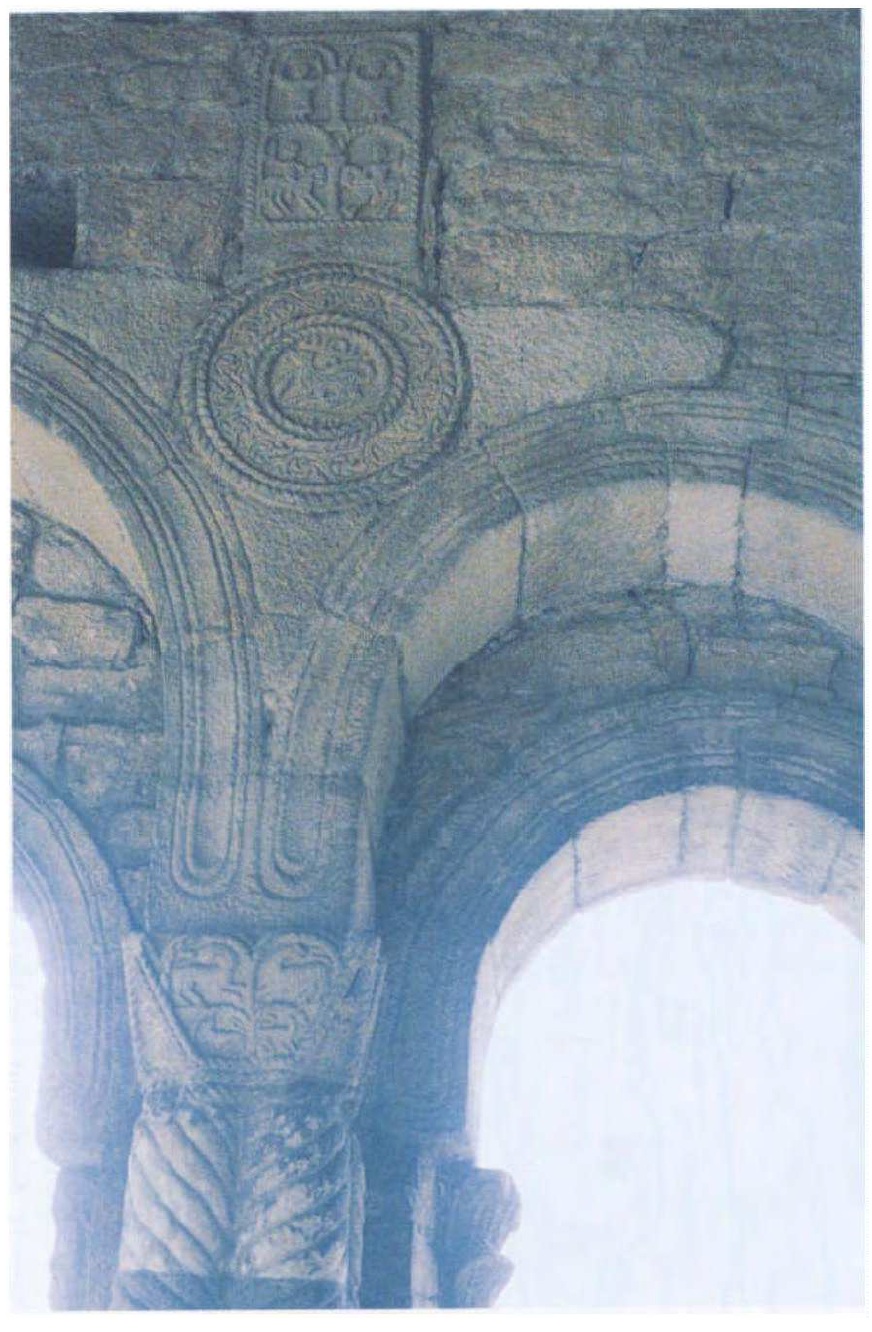
Church in Oviedo (Spain) Saint Mary (Santa María), the wall decoration is NOT Christian [chap5 photo8]
On page 91: Wall decoration in the Gothic throne hall of today's church of Saint Mary (Santa María) near Oviedo — no trace of Christianity. (Photo: U. Topper) (p.98)
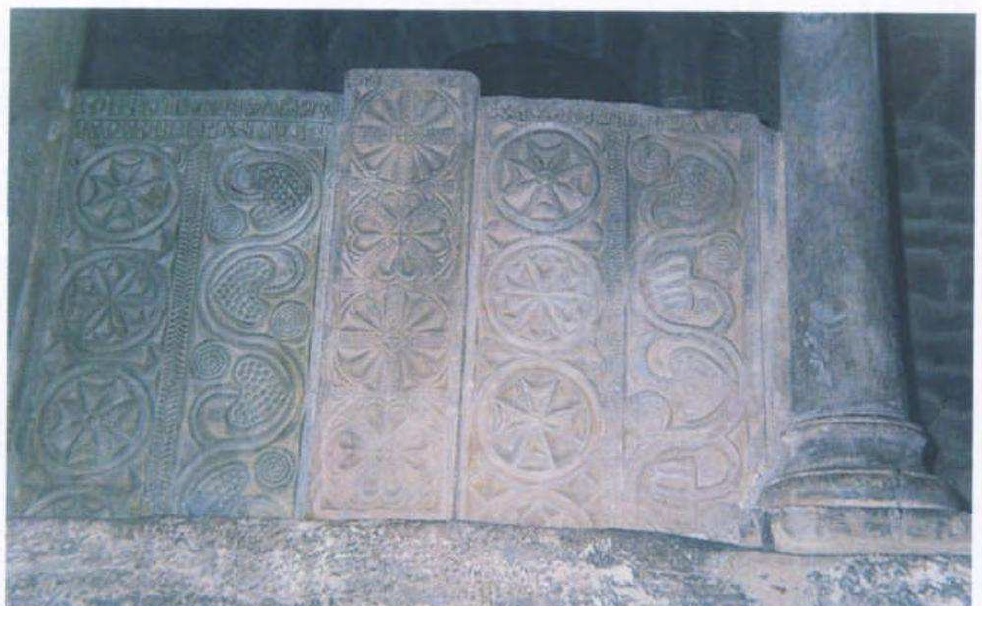
Oviedo: Church "Santa Cristina": The wall decoration is NOT Christian [chap5 photo9] --
Oviedo: Church "Santa Cristina" with FAKE iconostasis in Byzantine style [chap5 photo10]
On page 91: The iconostasis in Sta. Cristina, Visigothic, "7th century"; as can be seen, it is inserted unorganically. The inscriptions on the upper edge are indications for the 15th century.
The "church" Sta. Cristina with the fake iconostasis in a Byzantine style feature of Visigothic architecture. (Both photos: U. Topper) (p.99)
Drawings and paintings with INVENTED depictions
FAKE Apostle John writing the FAKE Apocalypse [chap5 photo11]
On pages 106 and 211: "The [FAKE] Evangelist John, writing the [FAKE] Apocalypse", Irish miniature of the 8th century (Abbey Library of St. Gallen). (p.100)
Portugal: FAKE purgatory 01 [chap5 photo12] -- Portugal: FAKE purgatory 02 [chap5 photo13]
On page 134: Modern tile image in Portugal: The souls of the deceased are comforted in purgatory by the saints. (Photo: U. Topper)
On page 134: Modern purgatory image with a coin collection box in Portugal. (Photo: U. Topper)
[The Fantasy of purgatory came from Iran and was a Fantasy description for the soul after death -
and the criminal Catholic Church then turned this into the stake for mass murder campaigns as a "real" purgatory].
(p.101)
Church of Saint Mary (Santa María) in Villaviciosa (Asturias, Spain): Scene with Wild Boar [I can't see any of it] [chap. 5 photo 14]
On page 161: Erotic scene at the portal of the Church of Sta. Maria in Villaviciosa (Asturias, Spain): A wild boar chases a man and tries to bite off his penis. One of many examples of Gothic paganism in the 13th century. (Photo: U. Topper) (p.102)
[Personally, I see anything of a boar or anything erotic].
Painting: FAKE Boniface is baptizing a FAKE Frisian [chap5 photo15]
On page 162: "[FAKE] Boniface is baptizing a [FAKE] Frisian – [FAKE] Boniface is [FAKE] killed by the [FAKE] Frisians." [FAKE] Sacramentary from Fulda, "around 1000." From the book: The Franks. Pioneers of Europe (orig. German: Die Franken. Wegbereiter Europas); Mannheim–Mainz 1996, p. 460. (p.103)
Carpet drawing page from Lindisfarne, Ireland [chap5 photo16]
On page 177: The famous "carpet page" from the [FAKE] Lindisfarne Gospel (Ireland), which is dated to the "period shortly before 700." From the book of Mr. David M. Wilson: Cultures in the North (orig. German: Kulturen im Norden); Munich 1980, p. 80. (p.104)
Chapter 7
Book by historian Mr. De Goff: Birth of purgatory (German version: Die Geburt des Fegefeuers)
https://www.amazon.de/Die-Geburt-Fegefeuers-Juni-2000/dp/B015YMU66G/
Aachen (Germany): FAKE Palatine Chapel [for the FAKE Charlemagne] [chap7 photo2]
Chapter 8

Wulfila FAKE Bible, one page of it [chap8 photo1]
Wodan stone [chap8 photo2]


Fake gravestone [chap8 photo3] -- FAKE Merovingian picture [chap8 photo4]

FAKE Maurus:dedication poem [chap8 photo5]
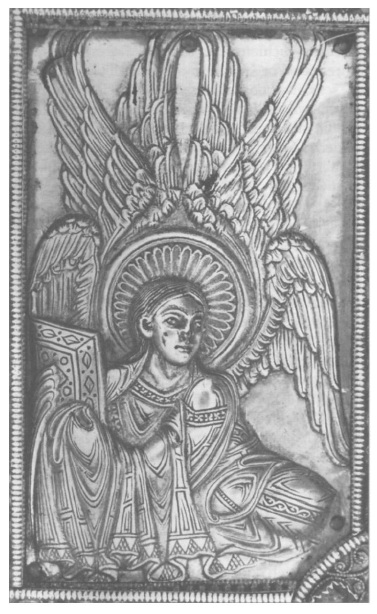
Trier: Gospel book, little angel [chap8 photo6]
Chapter 9
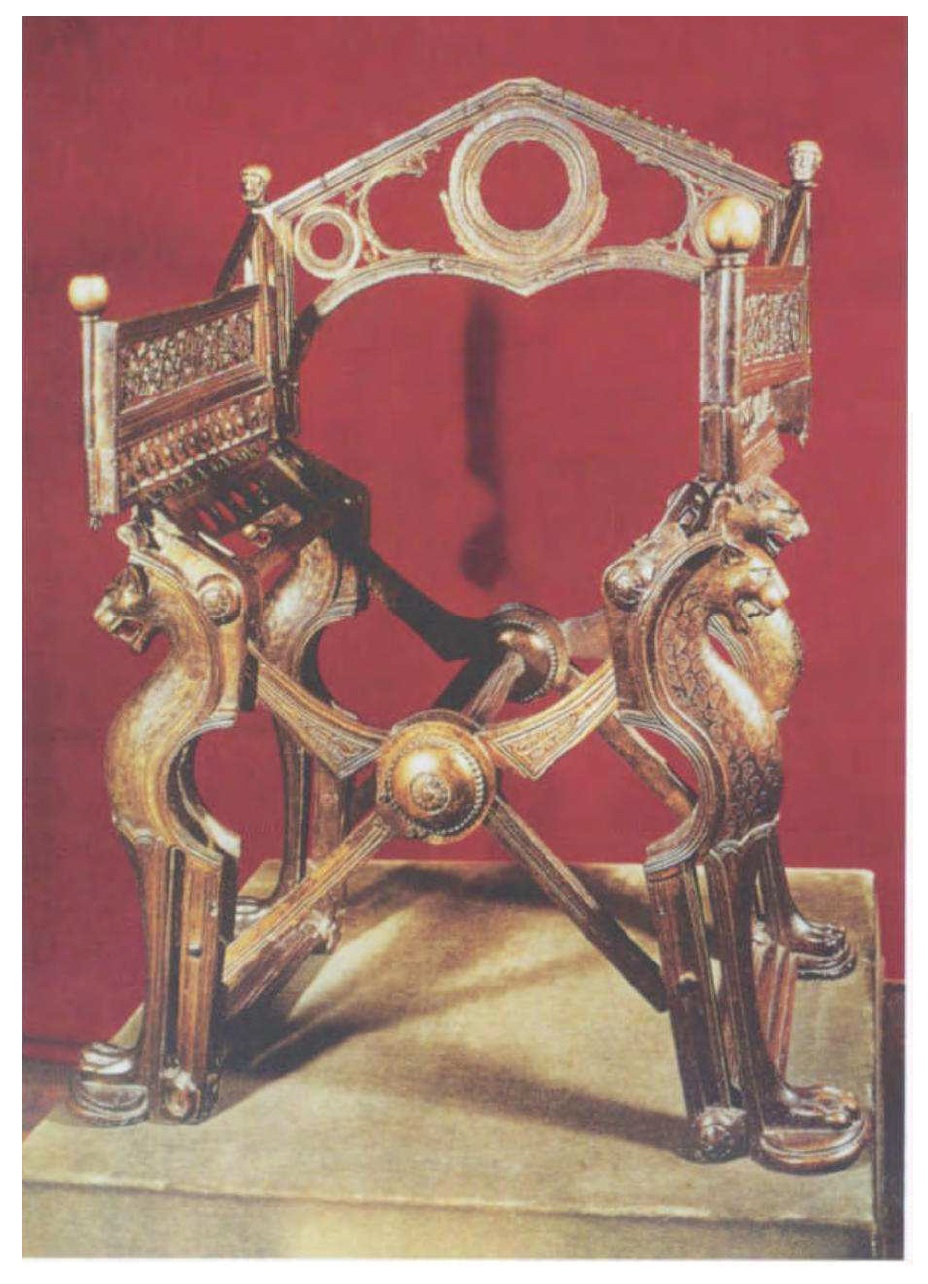
FAKE throne of a FAKE Dagobert with lions of criminal colonialism [kap9 foto1]
To page 166: [FAKE] throne of the [FAKE] Dagobert with orientalizing lions ("7th century"). Exposition of the Franks, Berlin 1997. From: The Franks. Pioneers in Europe (orig. German: Die Franken. Wegbereiter Europas); Mannheim–Mainz 1996, p. 395.
FAKE crosses [chap9 photo2]
On page 166: Modern crosses as evidence for [FAKE] Christianity of the [FAKE] Franks. Exhibition of the Franks (p.186)
Amulet [chap9 photo3]
About page 168: Baroque silver amulet container from the prince's tomb beneath the Cologne Cathedral. (p.186)
FAKE gravestone [chap9 photo4]
To page 168: The "Christian gravestone" [FAKE] of Niederdollendorf [NRW, Germany] ("7th century"), on which a pagan warrior and the Midgard serpent are depicted. Exposition of the Franks, Berlin 1997. (Photo: U. Töpper) (p.186)
FAKE pillars [chap9 photo5]
On page 166: [FAKE] pulpit pillar made of limestone, Paris, Hotel of [a Fantasy] God (Hôtel Dieu), ('7th century'). Exhibition of the Franks, Berlin 1997. (Photo: U. Topper) (p.187)
FAKE knife of a Frank with little gears [chap9 photo6]
On page 166: [FAKE] knife of a Frank, which has been replaced with clock gears from the 20th century. Exhibition of the Franks, Berlin 1997. (Photo: U. Topper) (p.187)

FAKE with 4 apocalyptic FAKE riders [chap9 photo7]
On page 179: The four apocalyptic [FAKE] riders are already wearing stirrups. Book illustration by Liebana, Spain, late 10th century. (p.188)
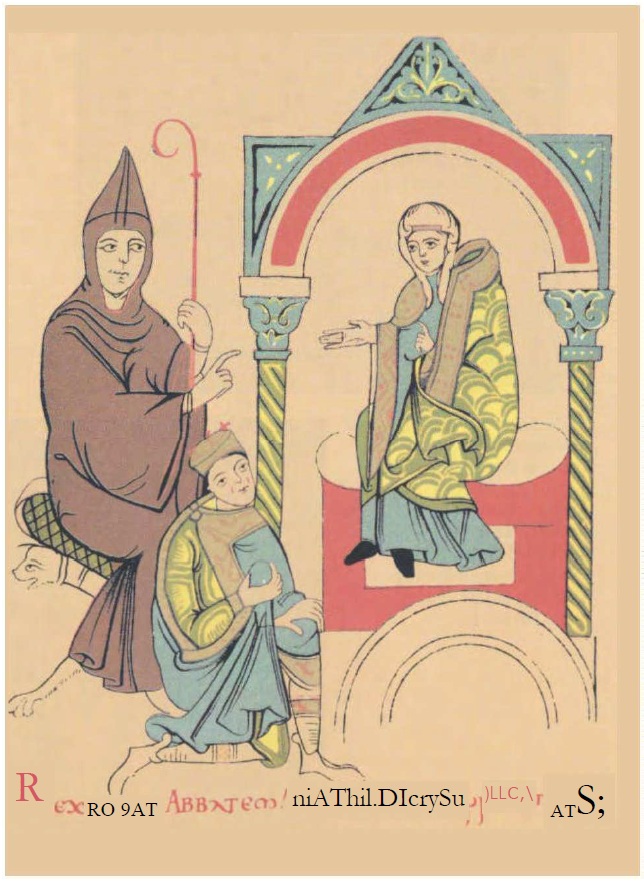
FAKE Canossa [chap9 photo 8]
On page 180: "[FAKE]-Emperor Henry IV kneeling before the [FAKE] Margravine of Canossa." From the parchment manuscript by the monk Donizo, Life of Matilda, completed in "1111." (Vatican Library, Rome) (p.189)
Asturias Peña: Petroglyph with crosses [chap9 photo9]
On page 201: The well-known image of Peña Tu in Asturias with prehistoric paintings, which more likely belong to the early Christian period of the Visigoths, around the 10th century. (Photo: U. Topper) (p.190)
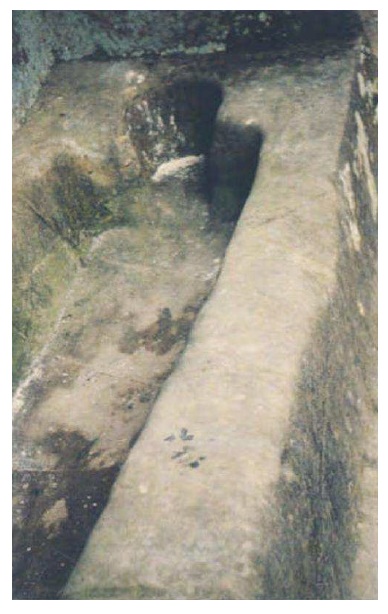
Inauguration grave to "play" a resurrection [chap9 photo10]
To page 201: The inauguration grave at the Extern Stones (Externsteine, Germany): pagan rite with a Christian cloak. (Photo: U. Topper) (p.190)
FAKE book illumination of a FAKE apocalypse [chap9 photo11]
On page 211: The illustrations of the Apocalypse are the oldest Christian book illuminations: the four [INVENTED] creatures before the [INVENTED] throne of the [INVENTED] Christ, Beatus of Liebana, Spain, late 10th century. (p.191)
FAKE Jesus with Alpha and Omega [that looks like a Capricorn or Baphomet] [chap9 photo12]
On page 201: [The Fantasy] Christ with Alpha and Omega. Further development of a pagan motif. [FAKE] Apocalypse illustration; from Liébana, [Northern] Spain [Cantabria], late 10th century. (p.191)
FAKE Jesus: FAKE deposition from the cross [chap9 photo13]
On page 223: The relief of the [Fantasy] deposition from the [Fantasy] cross at the German site of Extern Stones (Externsteine). The Irminsul is broken. In the lower part, one can still faintly see a pagan dragon scene. (Photo: U. Topper) (p.192)
Rock tombs
Spain, Province of Cádiz: rock graves [chap9 photo14]
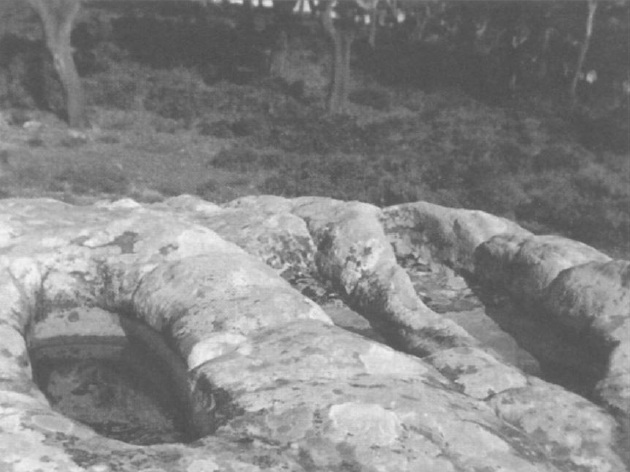
Rock cut tombs in the shape of bodies in the Spanish province of Cádiz (Photo: U. Topper, 1972) (p.202)
Northern Portugal: typical rock tomb [chap9 photo15]
A typical rock tomb in a village square in northern Portugal, which was used for ceremonial purposes (Photo: U. Topper). (p.202)
Chapter 12
A "Christian" Catholic, forged stone with forged inscriptions in China
Part of the Syrian FAKE inscription on the forged "Nestorian Stone" from Sian-Fu [Xiang-Fu] [chapter 12, photo 1]
Part of the Syrian [FAKE] inscription on the [forged] "Nestorian Stone" from Sian-Fu [Xiang-Fu]. In the first two lines is the date 1092 of the Greek calendar (according to the drawing by Kircher 1667). (p.246)
Part of the Chinese FAKE inscription on the forged "Nestorian Stone" from Sian-Fu [Xiang-Fu] [chap12 photo2]
The [forged] "Nestorian Stone" from Sian-Fu [Xiang-Fu], upper part with [FAKE] cross and [FAKE] title (according to the drawing in Kircher 1667). (p.246)
Astronomer Mr. Adam Schall, portrait [chap12 photo3]
Portrait of Mr. Adam Schall, painted by Mr. Johann Grueber in Beijing in 1660. Property of the S.J., Galloro, Rome. (p.252)
Astronomer Mr. Matteo Ricci in Beijing [chap12 photo4]
Below: Portrait of Mr. Matteo Ricci, painted after his death by the Chinese Jesuit Mr. Manoel Yu Wen-hui. Brought to Rome in 1614. (p.252)
Both illustrations are from: George H. Dunne, S.J.: Generation of Giants (Notre Dame, Indiana, USA, 1962) (p.252)
<< >>




![Church of Saint
Mary (Santa María) in Villaviciosa (Asturias,
Spain): Scene with Wild Boar [I can't see any of
it]](../d/014-03-fototeil-d/kap05-14-kirche-Sp-Asturias-Villaviciosa-Sta-Maria-szene-m-eber.jpg "Church of Saint Mary (Santa María) in
Villaviciosa (Asturias, Spain): Scene with Wild
Boar [I can't see any of it]")




![FAKE Jesus with
Alpha and Omega [that looks like a Capricorn or
Baphomet]](../d/014-03-fototeil-d/kap09-12-FAKE-Jesus-m-Alpha+Omega.jpg "FAKE Jesus with Alpha and Omega [that looks
like a Capricorn or Baphomet]")


![Part of the Syrian FAKE inscription
on the forged "Nestorian Stone" from Sian-Fu
[Xiang-Fu]](../d/014-03-fototeil-d/kap12-01-China-Xiang-Fu-kr-christen-faelschen-gedenkstein-01-syrischer-text.jpg "Part of the Syrian FAKE inscription on the
forged \"Nestorian Stone\" from Sian-Fu
[Xiang-Fu]")
![Part of the Chinese FAKE inscription
on the forged "Nestorian Stone" from Sian-Fu
[Xiang-Fu]](../d/014-03-fototeil-d/kap12-02-China-Xiang-Fu-kr-christen-faelschen-gedenkstein-02-chinesischer-text.jpg "Part of the Chinese FAKE inscription on the
forged \"Nestorian Stone\" from Sian-Fu
[Xiang-Fu]")


|
|
|